
SECURITY RESOURCE GUIDE
Construction Site Theft Prevention Checklist
A practical guide for reducing theft, vandalism, trespassing, material loss, and costly project delays on active construction sites.
Construction sites are exposed by nature. The right planning, patrol coverage, access control support, and after-hours visibility can reduce risk before it becomes expensive.
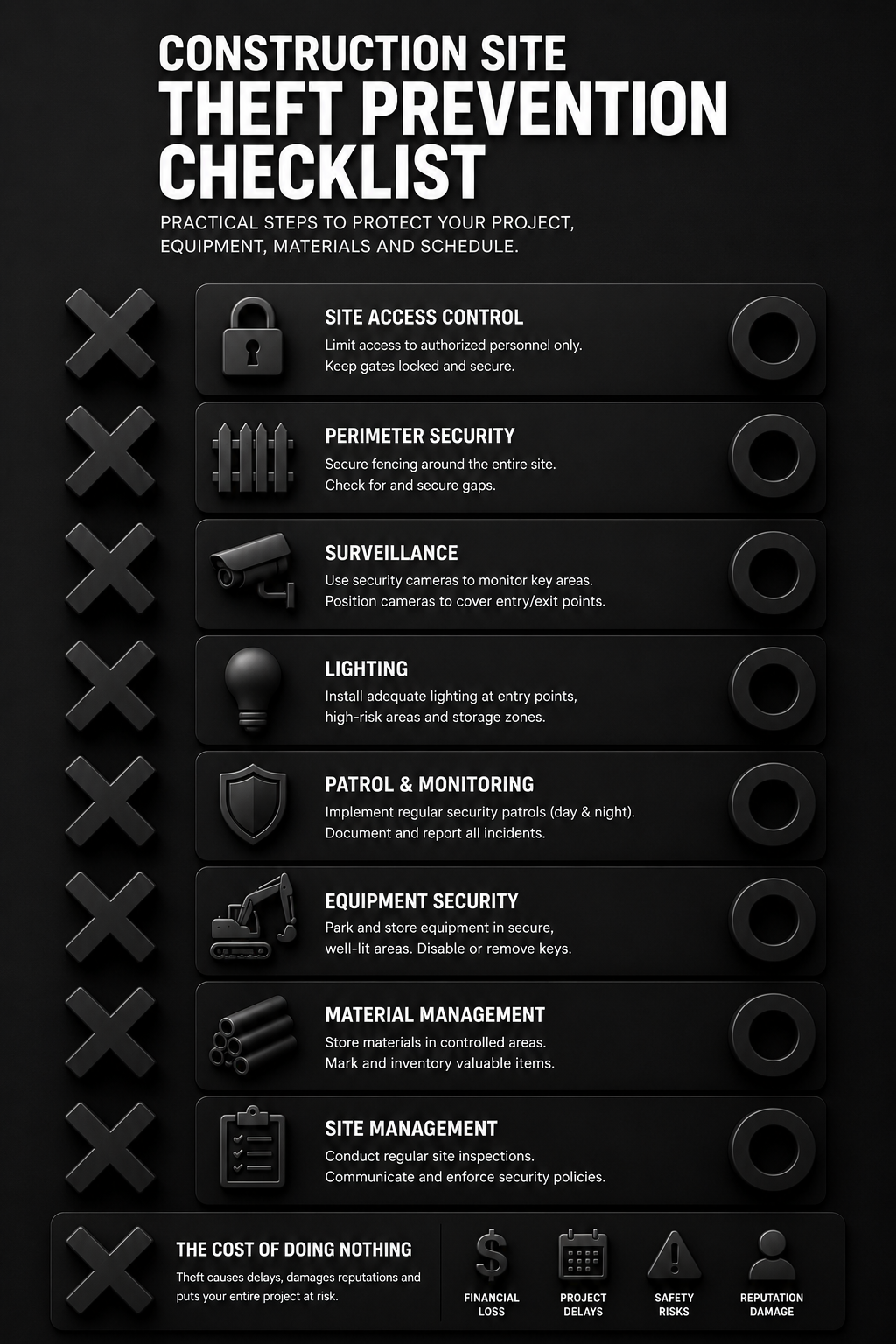
Why Construction Sites Get Targeted
Construction sites often contain high-value materials, heavy equipment, copper, fuel, appliances, tools, vehicles, generators, and temporary power systems. Many sites are also lightly occupied after hours, which creates an opportunity for theft and vandalism.
The real cost is rarely limited to the stolen item. Theft can trigger replacement costs, insurance claims, labor disruption, schedule delays, reordering headaches, and project management stress.
A strong theft prevention plan helps reduce opportunity, increase visibility, and protect the schedule.
Core Problem
Unprotected jobsites invite preventable losses.
A visible security plan helps discourage unwanted activity and gives project teams more control over after-hours risk.
Security problems are easier to prevent than fix.
Top Construction Site Theft Targets
Theft prevention starts by understanding what criminals usually target and where exposure is highest.
Copper & Electrical Materials
Copper wiring, grounding materials, conduit, electrical panels, and temporary power systems are frequent targets because they are valuable and often accessible before installation.
Heavy Equipment
Skid steers, lifts, generators, compressors, trailers, fuel tanks, utility vehicles, and specialized tools can be expensive to replace and disruptive when stolen.
Appliances & Fixtures
Residential and commercial developments may contain appliances, HVAC systems, cabinetry, lighting fixtures, and finish materials that become vulnerable near installation phases.
Fuel & Batteries
Fuel theft, battery theft, and tampering with generators or vehicles can stop work before crews even arrive the next morning.
Tools & Small Equipment
Hand tools, power tools, ladders, compressors, and contractor-owned equipment are easy to remove and difficult to recover.
Stored Building Materials
Lumber, pipe, wire, panels, fencing, roofing materials, and staged deliveries can create exposure when left unsecured overnight.
Construction Site Theft Prevention Checklist
Use this checklist to identify common gaps before they become expensive losses.
Secure access points: Limit unnecessary entrances, lock gates after hours, and clearly identify approved vehicle and pedestrian access routes.
Inspect fencing and barriers: Check fencing, gates, temporary openings, damaged panels, and weak perimeter areas regularly.
Control deliveries: Schedule deliveries when responsible personnel can receive and verify materials instead of leaving high-value items unattended.
Protect copper and electrical materials: Store copper, wiring, electrical gear, and temporary power components in controlled areas whenever possible.
Track equipment inventory: Keep a current list of equipment, serial numbers, vehicles, tools, trailers, and high-value assets on site.
Improve lighting: Add lighting around gates, material storage, trailers, equipment zones, and blind spots.
Reduce hiding places: Keep storage areas organized, remove unnecessary debris, and avoid creating concealed areas along fence lines.
Use visible security signage: Make security presence obvious with signage, marked patrol expectations, and controlled access reminders.
Document incidents quickly: Track dates, times, missing items, suspicious activity, gate damage, and security concerns.
Plan after-hours patrol coverage: Use visible patrols when the site is most exposed, especially during nights, weekends, holidays, and high-value project phases.
High-Risk Times
The site is usually most exposed when no one is working.
After-hours theft often happens overnight, on weekends, during holidays, before major installations, after large deliveries, or when materials are staged ahead of schedule.
Security patrol coverage can help create visibility during the exact windows when jobsites are most vulnerable.
Four Areas That Make the Biggest Difference
A strong theft prevention plan does not require confusion. Start with access, storage, visibility, and after-hours coverage.
Perimeter & Access Control
A construction site should not be easy to enter. Damaged fencing, unlocked gates, temporary openings, and unclear access routes create opportunities for theft and trespassing. Access control does not need to be complicated, but it does need to be intentional.
Material Staging & Storage
The way materials are staged can either reduce or increase risk. High-value materials should be stored in visible, controlled, and organized areas. Avoid leaving copper, tools, appliances, fixtures, or fuel assets near perimeter fencing or low-visibility zones.
Lighting & Visibility
Lighting is one of the simplest ways to improve deterrence. Focus on gates, trailers, equipment yards, storage zones, parking areas, temporary power systems, and any part of the site that creates hiding places.
Patrol Coverage & Reporting
Visible patrol coverage adds deterrence and documentation. Patrol officers can check gates, fence lines, trailers, equipment zones, material storage, and suspicious activity while creating reports that help project teams stay informed.
When Construction Sites Become Most Vulnerable
Security risk changes throughout the project. The right plan adjusts as materials, equipment, and site conditions change.
Early Site Work
Heavy equipment, trailers, fuel, temporary power, and access roads often create the first wave of exposure.
Material Delivery Phase
The risk rises when materials arrive before installation and sit unattended overnight.
Electrical Phase
Copper, wire, panels, grounding materials, transformers, and temporary power assets require extra attention.
Finish Phase
Appliances, HVAC systems, cabinetry, fixtures, tools, and finish materials can become attractive targets.
Weekend & Holiday Periods
Longer gaps in jobsite activity increase vulnerability and reduce natural supervision.
Multi-Site Projects
Builders managing several sites need consistent communication, patrol expectations, and reporting.
Questions Project Teams Should Ask
These questions help construction managers, developers, and owners identify weak spots before they become expensive problems.
What items are most valuable on site right now?
Identify what would create the biggest cost or delay if stolen.
Where is the site easiest to enter after hours?
Look at gates, fence gaps, access roads, temporary openings, and blind spots.
What materials are being delivered this week?
High-value deliveries should trigger added awareness and storage planning.
Who checks the site after crews leave?
Clarify responsibility for after-hours inspections, patrols, and reporting.
How are incidents documented?
Photos, dates, times, notes, and reports help create accountability.
When does risk increase next?
Plan ahead for copper installation, finish materials, major deliveries, weekends, and holidays.
How Security Patrol Services Help
Security patrol services create visible deterrence and active site awareness during the hours when construction sites are most exposed. Patrol coverage may include vehicle patrols, foot patrols, gate checks, perimeter checks, equipment yard inspections, incident reporting, and after-hours documentation.
For many construction teams, the goal is not only to respond to problems. The goal is to reduce opportunity before theft, vandalism, or trespassing impacts the project.
Diamond Group Standard
Diamond Quality. Bulldog Toughness.
Diamond Group Security helps construction teams protect materials, equipment, jobsites, and project timelines with nationwide patrol coverage and veteran-led standards.
Need Construction Site Security?
Speak directly with Jeff about your project location, timeline, security concerns, and coverage requirements.